A Year of Growth for Businesses Bold Enough to Invest

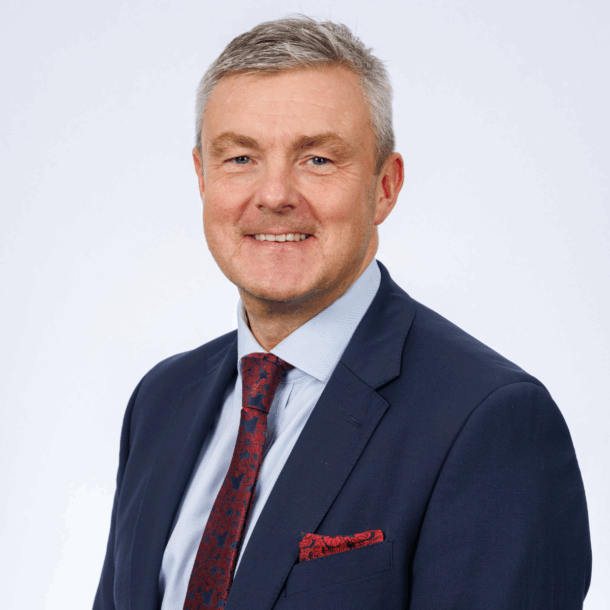
By Kevin Morgan, Managing Director of Cornerstone Commercial Finance
For businesses considering their next move, the availability and cost of finance matters as much as confidence. What we are seeing now is a market where, despite mixed sentiment, the conditions for investment are improving in practical and measurable ways.
It would be fair to say that confidence among SMEs has softened over the past year. Tax remains a significant concern, and many firms are telling us they expect to raise prices in 2026 as a result. But what has changed is visibility. Businesses now have a clearer view of their cost base, their tax position and the broader economic backdrop. That clarity, even if it comes with difficult decisions, allows firms to plan. Increasingly, we are hearing businesses describe 2026 as a year of delivery rather than delay.
That confidence is uneven and often sector-specific, but there is a common thread. Firms are aware that capital is available at a reasonable cost, and that this creates an opportunity to bring forward expansion plans that may have been parked while conditions were less certain. While confidence may be weaker than it was 12 or 18 months ago, the tone of conversations has become more constructive.
From a commercial finance perspective, demand is broad-based. In recent years, asset finance attracted particular attention, helped by tax incentives that made it especially attractive. Some of those advantages have since reduced, but rather than dampening activity, we are seeing demand across the full range of commercial lending. Property-backed finance, structured lending and asset finance are all in play. There is no single area standing out as subdued.
The lender side of the market is also shifting in favour of borrowers. There is an abundance of capital available, lending criteria are softening, and pricing is easing. This is particularly noticeable among the high street banks. As Covid-era loans have been repaid, balance sheets have strengthened and appetite has returned. Over the latter part of 2025, we saw increased willingness to lend and reductions in pricing, which has had a knock-on effect across the wider lending market.
Taken together, this creates a constructive environment for businesses that are prepared to act. Variable rates and medium- to longer-term fixed rates are both becoming more competitive, and lenders are more open to supporting growth propositions. For the right businesses, with credible plans, this is a favourable window.
That does not mean access to finance is automatic, or that all lending propositions are equal. One of the most important factors for SMEs is how they approach the market. Businesses that limit themselves to a single lender are inevitably limiting their options. A whole-of-market approach allows funding to be structured around the needs of the business rather than the constraints of a particular product.
Working with experienced commercial finance brokers gives businesses access to a wide lending universe and a much broader range of solutions. That matters not just for pricing, but for structure, flexibility and long-term suitability. It also means businesses can respond more quickly as conditions evolve, rather than being tied to one route.
Looking ahead, I believe the next phase will favour businesses that are willing to make considered investment decisions. After a subdued second half of 2025, the combination of capital availability, lender appetite and improving rates creates a platform for growth. Entrepreneurs who are prepared to invest now have the opportunity to build strong foundations for future years.
Those who continue to defer decisions may find themselves standing still while the market moves on. In a more competitive environment, that carries its own risks. Turnover and profitability are not guaranteed simply by waiting for conditions to become perfect.
The message I would give to business owners is not to ignore risk, but to recognise opportunity. The finance market is signalling that it is open for business. For firms with ambition, a clear plan and the willingness to engage properly with the funding landscape, this is a period that can be used to support sustainable growth rather than simply to tread water.

Cornerstone Podcast Series
Kevin Morgan talks about this and more in the Cornerstone Finance Group podcast episode The Economic Outlook for 2026.